How Often Should You Re-Thatch a Gazebo?
A well-thatched garden gazebo will typically need re-thatching every 5 to 8+ years, though several factors can shorten or extend that window considerably. Understanding what drives that timeline is the difference between protecting your investment and facing an avoidable repair bill.
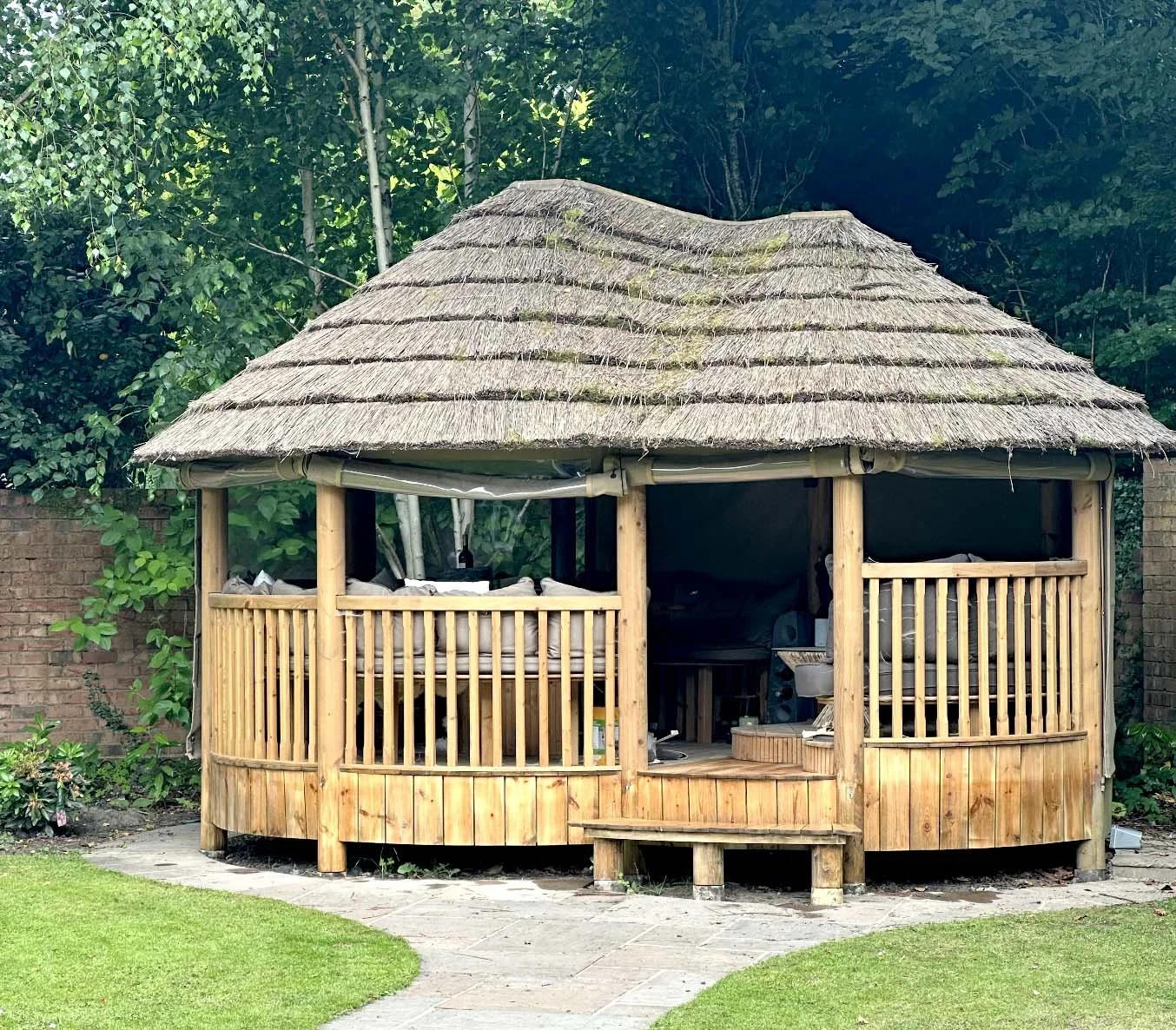
This is a recent job where this beautiful Julian Christian Gazebo’s thatch was urgently needing replacement.
Along with moss build up, the reeds had lost their integrity causing the reeds to fall out and thin the thatched roof with patchy areas creating leak issues.
How long does thatching typically last on a garden gazebo?
The lifespan of a gazebo thatch depends on three things above all else: the material used, the pitch of the roof, and how exposed the structure is to the British weather.
Reed is the most durable thatching material available and, when laid correctly by an experienced thatcher, can last towards the upper end of that 12 to 20+ year range. Combed wheat reed performs well but sits in the middle of that window. Long straw, while beautiful in appearance, is the least durable of the three and will typically need attention sooner, particularly on a garden structure that is more exposed to wind and moisture than a domestic roof.
Roof pitch plays a bigger role than many people realise. A steeper pitch sheds rainwater faster and more completely, reducing the time moisture sits against the thatch and slowing the natural decomposition process. Flatter roofs hold water for longer and will deteriorate noticeably faster as a result.
It is also worth remembering that a garden gazebo thatch is exposed to the elements from all sides, unlike a house roof that benefits from the thermal mass of the building beneath it. This makes siting and shelter genuinely important factors in how long your thatch performs.
What are the signs your gazebo needs re-thatching?
The most reliable indicator is the ridge. The ridge is the topmost section of the thatch and, because it faces directly upward and takes the full force of rain, wind, and UV exposure, it deteriorates faster than the main coat. If the ridge is visibly thinning, crumbling at the edges, or beginning to sag, that is the first sign that professional attention is needed.
Beyond the ridge, look for the following:
The thatch is thinning visibly in patches, particularly on south or west-facing sections that receive the most sun and prevailing wind. Moss and algae growth has become heavy and persistent, which traps moisture against the material and accelerates decay from beneath. The internal ceiling of the gazebo, if lined, shows signs of damp or water staining after rainfall. The overall profile of the roof has flattened or lost its crisp, layered appearance, indicating that the material has compressed and thinned beyond its effective weatherproofing depth.
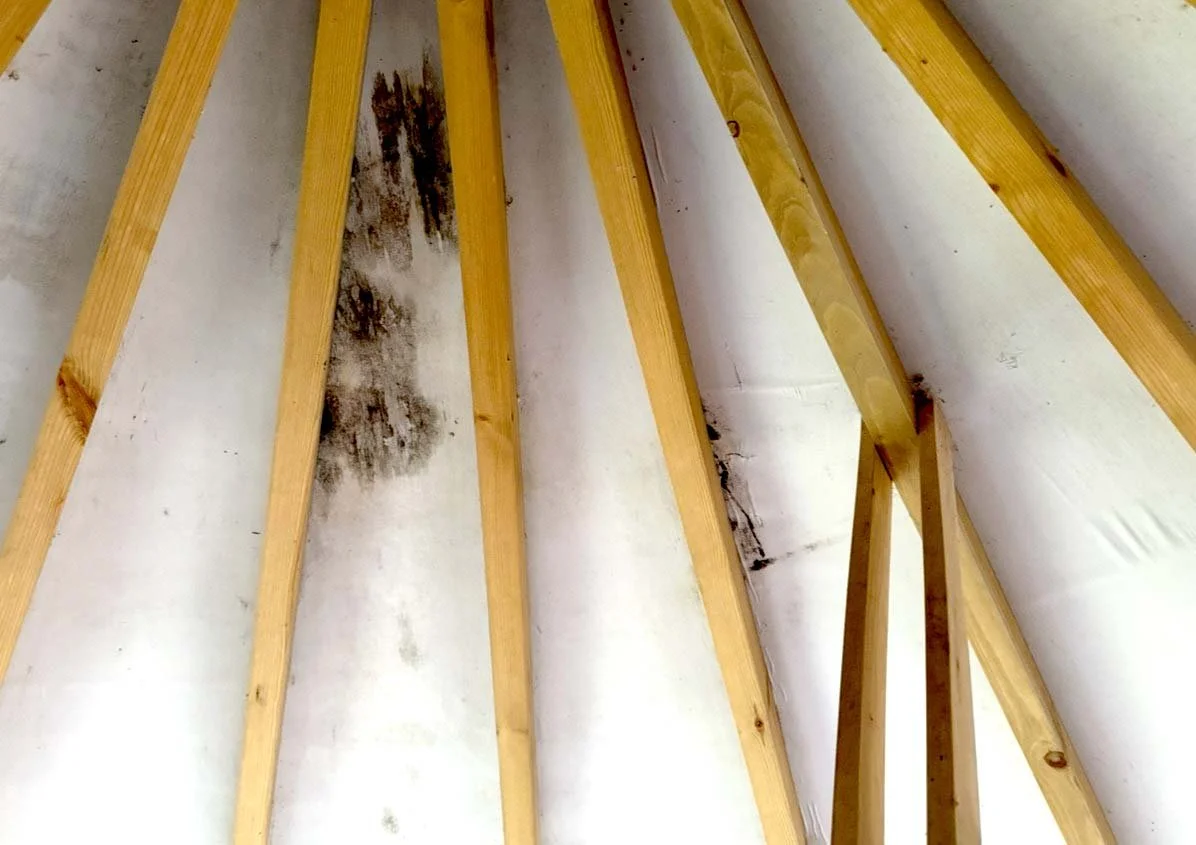
Detecting damp issues
The internal ceiling of the gazebo, if lined, shows signs of damp, mould or water staining after rainfall. Here this recent re-thatch showed signs of the boards becoming rotten. Re-thatch before it gets like this.
None of these signs should be left unaddressed. A timely re-ridge, carried out before the main coat is compromised, can extend the life of the thatch significantly and defer the cost of a full re-thatch by several years.
Does the type of thatch affect how often it needs replacing?
Yes, materially so. We always replace with the best quality reed. It is the clear choice for longevity and is the material we most commonly recommend for garden gazebos that are intended to last. It is dense, resistant to compression, and handles the UK climate well across all regions.
The quality of the original laying also has a direct bearing on longevity. Thatch that has been laid at the correct depth, with proper fixings and a well-finished ridge, will consistently outlast work that has been hurried or under-specified. This is one reason why choosing an experienced specialist matters as much as choosing the right material.
What happens if you leave a gazebo roof too long without re-thatching?
The consequences of leaving a thatched gazebo roof beyond its natural lifespan compound quickly. Once the thatch thins past the point of effective weatherproofing, rainwater begins to penetrate. From that point, the timber frame beneath is exposed to sustained moisture, which accelerates rot in the rafters, the batten work, and ultimately the structural posts.
What might have been a straightforward re-thatch becomes a significantly more complex and costly refurbishment once the timber is involved. In more serious cases, structural elements need replacing entirely before a new roof can be laid, adding both time and expense to the project.
There is also the question of the structure's appearance. A deteriorating thatch ages a gazebo rapidly and undermines the value it adds to your garden and property. Maintaining the roof on schedule protects both the aesthetic and the investment.
How much does re-thatching a gazebo cost in 2026?
The cost of re-thatching a garden gazebo in 2026 varies depending on the size of the structure, the material chosen, and the extent of any preparatory or timber repair work required. As a general guide, a professional re-thatch on a smaller gazebo starts from just £1,500, with larger or more complex structures sitting higher depending on the scope involved.
A re-ridge, where only the topmost section requires replacement, is a more affordable intervention and is well worth considering if the main coat is still in reasonable condition. Addressing the ridge promptly is almost always the more cost-effective route compared to allowing deterioration to reach the point where a full re-thatch becomes unavoidable.
It is worth being cautious of unusually low quotes. Under-specified materials or inadequate preparation will shorten the lifespan of the finished roof, meaning the apparent saving quickly becomes a false economy. A properly scoped job, carried out with quality materials, is the only approach that delivers the 12 to 20+ year lifespan that a thatched gazebo roof should provide.
If your gazebo is showing signs of wear, or you simply want an honest assessment of where your roof stands, our team at Chiltern Garden Buildings are here to help. We re-thatch gazebos from all manufacturers across the whole of the UK, and we will give you a clear, detailed quote before any work begins. Visit our re-thatching services page to find out more or get in touch with the team today.
Can any gazebo be re-thatched, regardless of the original manufacturer?
Yes, and this is where many gazebo owners are pleasantly surprised. Whether your structure was built by Julian Christian, Breeze House, Beach Hut Leisure, Crown Pavilions, The Lapa Company, Evolution Designs, M&M Timber, or Teak House, our team at Chiltern Garden Buildings can re-thatch it to the same exacting standard as the original, and in most cases at a significantly lower cost than returning to the original manufacturer.
The thatching itself is independent of who built the frame. What matters is the condition of the underlying timber, the roof pitch, and selecting the right material for the structure and its setting. Our team has worked across every major brand and a wide range of bespoke one-off structures, so regardless of the origin of your gazebo, we will know exactly how to approach it.
For many owners of premium gazebos, this is a genuinely useful option. The original build quality is not diminished by having the roof re-thatched by a specialist with equivalent expertise, and the cost saving over a manufacturer re-thatch can be substantial. The result is a roof that looks, performs, and lasts exactly as it should, without the premium that comes with going back to the original supplier.